
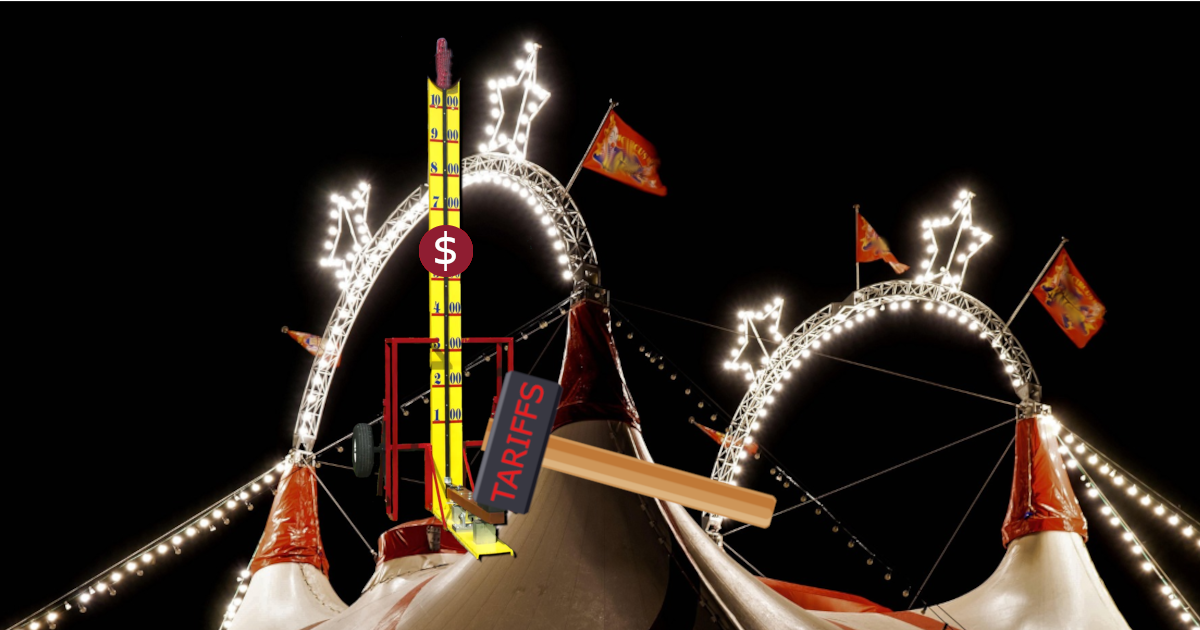

Tariff Creep:
100-Year Trade War
Tariff Redux…
Tariffs have been commonly used by US Presidents for decades, and are typically targeted to a certain industry or product from a specific country. In contrast, the current administration has implemented broad, world-wide tariffs that go far beyond the duties imposed during the same administration’s previous trade war with China. The levies announced on April 2 Liberation Day far surpassed the scope of the first-term tariffs, with Federal Reserve Chair Jerome Powell commenting they were “significantly larger than anticipated”. The last time such sweeping global tariffs were implemented was during the Smoot-Hawley Tariff Act of 1930, which is widely viewed as having worsened the Great Depression.
Rollback
The administration announced a series of tariffs starting in February, leading up to the April 2 Liberation Day. By the time Liberation Day tariffs were announced, markets had already dipped by 7%. The staggering tariffs on dozens of countries announced on Liberation Day blindsided markets, sending stocks plunging an additional 12%. Markets careened as much as 19% below February highs in less than two months, bumping against the cusp of a technical bear market. In a pivotal move on April 9, a 90-day pause was announced for reciprocal tariffs. Since then, markets have reversed their declines, further fueled by a crucial May 12 agreement between the US and China to de-escalate their tariff battle.
Delayed Impact
Even with current pauses on higher rates, global tariffs remain at the highest levels since 1934, and while inflation has remained tame, it is possible that price increases are on the way. In anticipation of tariffs, many companies front-loaded purchases, causing US GDP to decline for the first time in three years, as merchants scrambled to boost inventories ahead of higher levies. However, an abrupt end to the massive front-loading of goods was signaled by the US trade deficit narrowing by the most on record in April. As front-loaded inventory is depleted, it may become more difficult for companies to delay passing tariff costs on to consumers. Some of the world’s largest retailers have said they expect tariffs to result in higher prices for consumers, including Walmart, which planned to raise prices by this month.
Stagflation Worries…
With interest rates still elevated as the Fed attempts to conclude its historic campaign against post-pandemic inflation, investors remain focused on eagerly-awaited rate cuts. One concern regarding the Fed is that higher prices will be accompanied by a slowdown in the labor market. This could put the Fed into a difficult situation of choosing between its dual mandate of stable prices and full employment, leaving investors to anticipate if it will keep rates elevated to quell inflation, or lower them to prevent job losses. While markets seem to have concluded that the worst is over for tariff policy after the April 9 pivot and May 12 agreement, uncertainty still lingers over the effects tariffs will have on prices, and upcoming inflation data may remain an important focal point for markets. Fed Chair Jerome Powell has said he expects price pressures from tariffs to show up within the next few months.
July 2, 2025
Sources:
Bloomberg
Britannica
Reuters
US Bureau of Economic Analysis
Yale Budget Lab
Markets Demystified is published on the first Wednesday of each quarter, and explores how stock market investing can relate to personal finance.
Thanks for reading!
Aesop Advisor LLC advertisements including newsletters and other publications are for informational purposes only. They do not attempt to predict future stock market moves and are not intended as individual investment advice. Aesop Advisor LLC newsletters and publications are not recommendations to buy, sell or hold any asset and are not intended as actionable investment advice or market timing. Equities references generally refer to the overall stock market, though if individual companies are mentioned, it is not a recommendation to buy, sell, or hold shares of the company. Unless otherwise indicated, terms including "stocks", the "stock market", and "market(s)" refer to Standard & Poor's 500 index. All investments involve risk and the past performance of a security or financial product does not guarantee future results or returns. While diversification may help spread risk, it does not assure a profit or protect against loss. There is always the potential of losing money when you invest in securities or other financial products. Publications and advertisements from Aesop Advisor LLC are not intended as investment, legal, or tax advice. Although gathered from sources believed to be reliable, Aesop Advisor LLC cannot guarantee the accuracy and completeness of data or information presented in publications and advertisements. This is an advertisement.